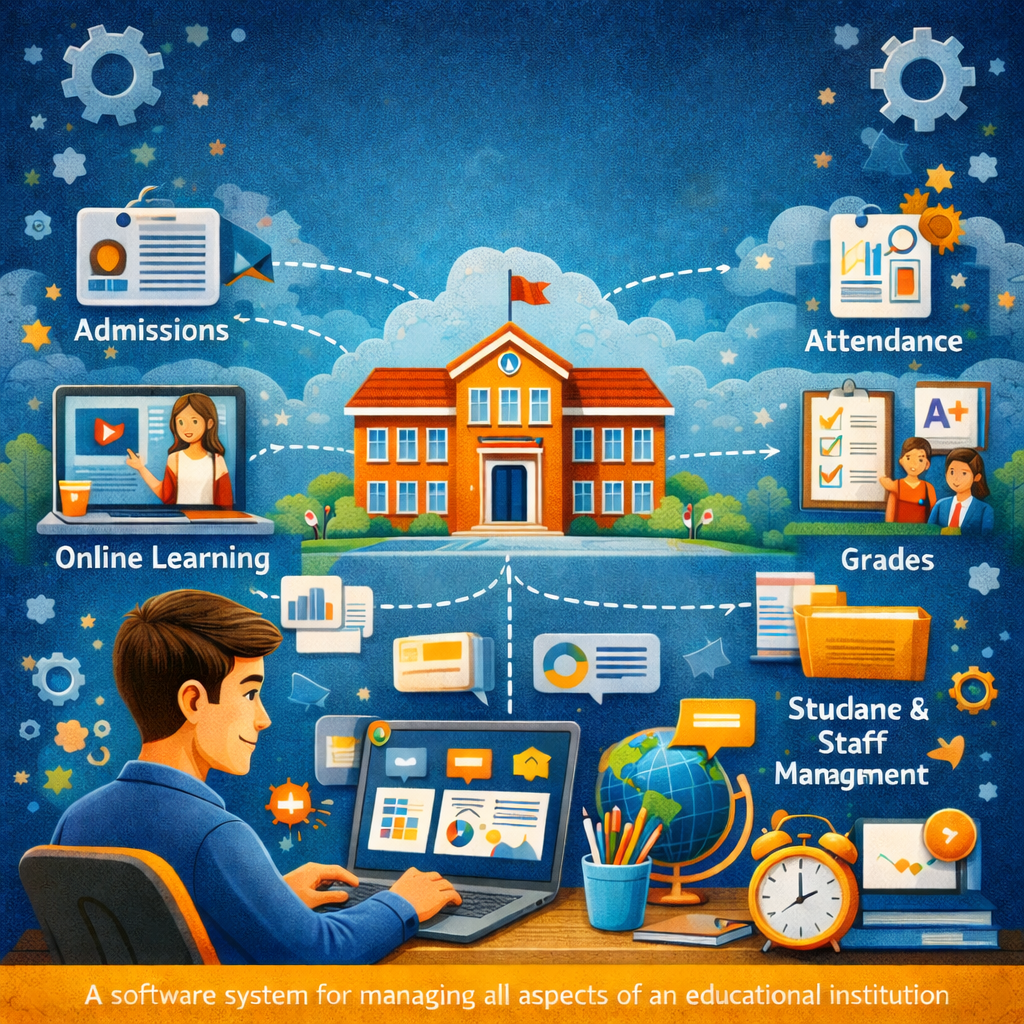

In recent years, digital transformation has revolutionized how schools manage their operations, and at its heart is the Education Management System (EMS). With the growing demand for streamlined processes and efficient management, especially in Nigerian schools, school management software is no longer a luxury but a necessity. From attendance tracking to fee management, EMS platforms simplify daily school tasks, allowing schools to focus more on education and less on administrative work. In this guide, we’ll explore what an EMS is, its features, and how it can benefit schools, particularly in Nigeria.
What is an Education Management System (EMS)?
An Education Management System (EMS) is an integrated software platform designed to streamline the administrative and academic functions of schools. By consolidating tasks such as student records, attendance, grading, fee management, and communication in one place, an EMS enables schools to manage their operations more effectively and efficiently.
EMS platforms serve as a central hub for school management, benefiting administrators, teachers, students, and parents alike. Whether it’s ensuring accurate attendance tracking or automating fee collection, an EMS like ExcelMind simplifies school management, saving time and reducing the chance for human error.
Core Features of an Education Management System (EMS)
1. Student Information Management
An EMS stores comprehensive student data, including personal details, academic history, grades, and attendance records. This centralizes information for easy access, making it simple for teachers and administrators to retrieve and update student data.
2. Attendance Tracking
One of the most important features of any school management system is attendance tracking. With ExcelMind, teachers can mark attendance digitally in seconds. The system automatically updates records in real-time, making it easy for school administrators to generate attendance reports quickly.
4. Grading and Assessment
EMS platforms simplify grading by allowing teachers to create and grade assignments and exams online. ExcelMind includes a seamless grading system that automatically calculates scores and provides instant feedback to students. This eliminates the need for manual grading and speeds up the entire assessment process.
5. Fee Management
An EMS like ExcelMind helps schools track and collect fees digitally. Parents can make secure online payments, receive reminders, and automatically generate receipts. This feature reduces administrative workloads, ensures timely payments, and helps maintain accurate financial records.
6. Timetable Management
An EMS enables schools to create and manage timetables, avoiding class schedule conflicts. The system can be easily updated, ensuring that teachers and students are always aware of their schedules. This feature is particularly useful for schools with multiple classes and teachers, as it prevents errors and confusion.
7. Parent-Teacher Communication
Communication between parents and teachers is critical for student success. An EMS allows schools to send real-time updates to parents about their child’s performance, upcoming events, and attendance. With ExcelMind, parents receive instant notifications about their child’s academic progress, fostering a stronger partnership between the school and home.
8. Data Dashboards and Reporting
EMS platforms provide powerful data dashboards that give school administrators real-time insights into various school metrics. From academic performance and attendance trends to financial reports, these dashboards help administrators make informed decisions and improve school operations.
Benefits of Using an EMS in Nigerian Schools
1. Improved Efficiency and Reduced Administrative Burden
The adoption of an EMS reduces manual paperwork, saving schools time and resources. In Nigerian schools, where administrative tasks can be overwhelming, automating functions such as attendance tracking, grading, and fee management enables staff to focus more on teaching and student support.
2. Accurate and Real-Time Data
Manual systems are prone to errors, especially when handling large volumes of data. An EMS ensures that all school data is stored securely and updated in real time, reducing errors and providing accurate information when needed. For example, ExcelMind allows administrators to generate instant reports on student performance and attendance.
3. Enhanced Communication and Engagement
With built-in communication tools, EMS platforms improve parent-teacher interaction. Parents are kept informed about their child’s progress through instant notifications about grades, attendance, and school events. This fosters better collaboration between parents and schools, leading to improved student outcomes.
4. Cost Savings and Scalability
As Nigerian schools grow, so do their administrative tasks. An EMS offers scalability, adapting to the school’s needs without requiring additional staff. By automating administrative tasks, schools can save costs in the long run, enabling them to allocate resources more effectively toward educational development.
5. Increased Accountability and Transparency
An EMS promotes accountability by providing a transparent system where all actions are logged, tracked, and accessible. Whether it’s grading, attendance, or fee payments, everything is recorded, ensuring that schools can easily trace and audit their operations when necessary.
Challenges of Implementing an EMS in Nigerian Schools
Despite the many benefits, Nigerian schools may face challenges when implementing an EMS:
- Internet Connectivity: Many schools, especially in rural areas, face unreliable internet connectivity, which can hinder effective use of cloud-based EMS platforms.
- Staff Training: Teachers and administrative staff may require training to utilize an EMS, which could delay its full implementation.
- Costs: While the benefits are clear, the initial setup costs of an EMS may be a barrier for some schools, especially those with limited budgets.
However, with the right support and school management software tailored to the needs of Nigerian schools, such as ExcelMind, these challenges can be overcome.
Conclusion
An Education Management System (EMS) is a game-changer for schools looking to improve efficiency, accuracy, and communication. By automating routine administrative tasks, such as attendance tracking, grading, and fee management, EMS platforms like ExcelMind enable schools to focus on what truly matters: providing quality education.
Are you ready to streamline your school’s operations and improve student outcomes? Try ExcelMind today and see the difference it can make in your school’s management.
Key Takeaways
- EMS platforms automate key administrative tasks, improving efficiency and accuracy.
- ExcelMind offers a comprehensive, easy-to-use school management system for Nigerian schools.
- An EMS fosters better communication between schools and parents, enhancing student success.
FAQs (With WordPress-Ready FAQ Schema)
Q1: What is an Education Management System (EMS)?
An Education Management System (EMS) is a software platform that integrates various school management functions, including student data, attendance, grading, and communication, into one system.
Q2: How does an EMS improve attendance tracking in schools?
EMS platforms automate attendance tracking, ensuring real-time, accurate data that helps schools monitor attendance trends and promptly follow up on absences.
Q3: Can EMS platforms help schools manage fees?
Yes, EMS platforms like ExcelMind enable schools to manage fee collection online, send reminders, generate invoices, and automatically track payments.
Q4: How does EMS benefit parents and schools?
EMS platforms provide real-time access to academic performance, attendance records, and school updates, enhancing parent involvement and improving communication between parents and schools.